
Clermont County Recent Arrests
Start with the Clermont County Jail Inmate Search for any recent booking that ended in county-jail custody. The Sheriff's Office calls it the most current listing available. Updates land at the top of every hour. There is no separate 24-hour booking feed. The county publishes no multi-day arrest blotter either. That gap matters. A roster entry shows who is held now, not everyone arrested over a date range. A citation, a quick release, a transfer, or a booking elsewhere can keep a real arrest off the current list.
Match each window to its job. The 24 Hour Arrests page explains the same-day fallback. The Arrest Log page separates press reports and secondary archives from an official blotter.
| Window | Best source | What it can establish | Photo |
|---|---|---|---|
| Current custody | Sheriff inmate roster | Hourly public listing with booking, charge, court, and bond fields | No photo field observed |
| Same day | Hourly roster plus records fallback | Bookings still in county custody; no official 24-hour feed found | Request separately if releasable |
| Multiple days | Press releases, court files, records request | Selected events and case history, not a complete blotter | Varies by source |
| Last 30 days | RecentlyBooked, unofficial | A moving secondary snapshot requiring official verification | County image limitation stated |
Arrested Last Night in Clermont County
Checking on a late arrest? Start with the hourly roster and read the booking date on each entry. List order does not equal arrest time. No official booking-to-roster delay is published. Intake, release, transfer, and data entry may still be in motion. That can leave a name missing. Wait for the next top-of-hour update. Ask the records office about a known arrest that never appears. Use the VINELink Check when you want release or transfer alerts for one person. VINELink and the roster refresh on different schedules.
The Sheriff's homepage links to the current list and its hourly update statement. Selected Sheriff press releases cover major operations and investigations. They are not a roll of everyone arrested last night. Agency social accounts share that limit. The sheriff's office offers no jail app with booking listings or photos.
The official roster interface on the Sheriff's site is the current-custody starting point. Treat it as a live jail tool, not a date-bounded arrest feed.
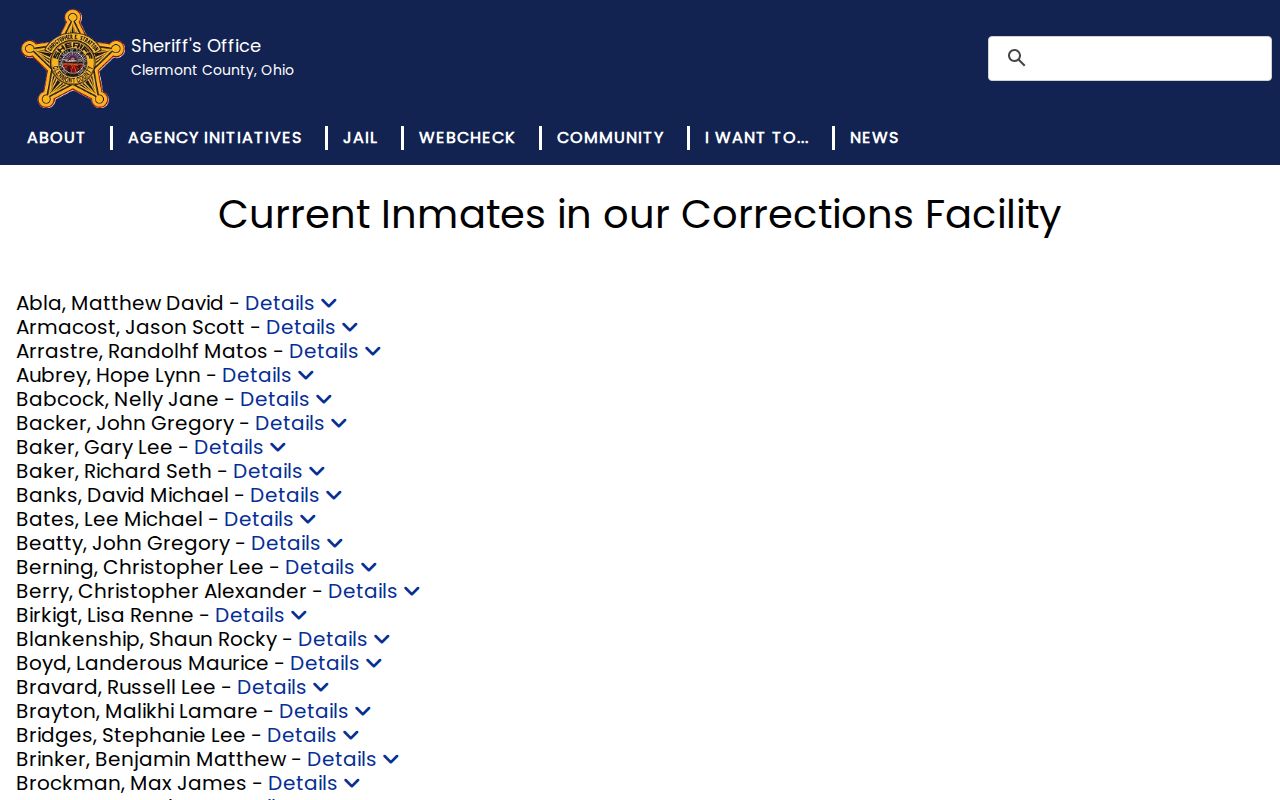
Open a name and the detail view shows identifiers, charges, court data, and bond context. No booking-photo field appears.
Note: A missing roster name is inconclusive until custody, release, transfer, and records channels have been checked.
Search the Clermont County Jail Roster
The roster is an alphabetical accordion list, not a search form. Click a name. It expands into the person's current public booking detail. Fields can include full name, date of birth, sex, and booking number and date. Charge code and description can appear too. Case number, court, court date, and bond type and amount round out the entry. No final disposition field is published. The roster also never says how long an entry stays up after release. It works well for current custody and poorly for older bookings.
| Roster field | How to use it |
|---|---|
| Name, DOB, sex | Compare identity carefully; avoid relying on a shared name alone. |
| Booking number and date | Use these identifiers in a records or photo request. |
| Charge code and description | Read as booked charges, not final findings. |
| Case number, court, court date | Carry the case into the correct clerk system for later events. |
| Bond type and amount | Provides current roster context; confirm later changes with the court. |
A practical current-custody check takes only a few steps:
- Open the official roster and scan the alphabetical name list.
- Expand the matching entry and compare DOB plus booking number.
- Record the booking date, case number, court, next date, and bond fields.
- Use the named court's case system for updates the roster cannot show.
- If the person has left the list, check VINE, the records unit, or another custody locator.
The 2024 Sheriff annual report puts the jail's scale in numbers: 4,605 bookings and 4,674 releases that year. Average daily population ran 310. Average monthly population was 384. Those are administrative totals, not a trend line. They say nothing about whether arrests rose or fell. The jail's age explains older references, since the maximum-security core opened in 1986, booking and classification space was upgraded in 2003, and a 192-bed medium-security addition arrived in 2006.
Where Clermont County Arrests Appear
Arrest information in Clermont County is scattered. Custody, agency, court, and secondary sources each publish a piece. Start with the office that owns your question. The Sheriff roster handles present county custody. Sheriff releases cover selected events, the municipal and Common Pleas clerks track case progress, and local news and commercial archives come last since their coverage can be selective, delayed, or stale.
| Channel | Official? | Coverage | Photo treatment |
|---|---|---|---|
| Sheriff jail roster | Yes | Current county custody, hourly update statement | No public photo field observed |
| Sheriff press releases | Yes | Selected investigations and operations | May include an agency-supplied image |
| Municipal/Common Pleas clerks | Yes | Dockets, warrants in identifiable cases, and dispositions | Not a mugshot source |
| Clermont Sun news | No, news outlet | Weekly print and rolling event coverage | Sometimes supplied photos |
| RecentlyBooked | No | Claims a moving 30-day county snapshot | States county images are not supplied |
| Mugshots.com | No | Historical county archive, not live custody | May show copied historical content |
The Clermont Sun news section is the strongest local newspaper option. Its weekly, rolling story cycle is not a booking database. Busted Newspaper and the RecentlyBooked Clermont page can preserve a lead. They hold it after the live roster changes. Mugshots.com's county archive reaches back into older years. None of them are official. Check anything you find against the Sheriff and the clerk of court. The RecentlyBooked county view is a secondary window, not an official roster. Its record totals and refresh times shift between visits.
Use a secondary entry only as a lead. Verify the name, date, or booking ID through the Sheriff, the arresting agency, and the clerk.
Clermont County Arrests by City
Arrests in Clermont County often involve more than one agency. Milford, New Richmond, or Batavia Village police may write the report and make the arrest. The jail itself belongs to the Sheriff. The jail books the person. The Sheriff's roster then becomes the quickest way to check current custody. But that is only part of the picture. A city arrest can end in a citation, a release, or a transfer to another agency. It may never reach the county roster at all. A city name may sit on a booking in a secondary archive. It is just a label. It does not tell you who actually made the arrest.
- Milford Recent Arrests covers Milford Police records and the county booking handoff.
- New Richmond Recent Arrests covers village police contacts, county custody, and records limits.
- Batavia Recent Arrests covers the county seat, Village Police, Sheriff, and overlapping agency routes.
None of these three departments posts a public arrest blotter. So work the chain instead. Ask the arresting department for its records, check the Sheriff roster for anyone in county custody, and pull the case from the right clerk.
Inside a Clermont County Arrest Record
Booking is what happens when the jail takes someone in after an arrest. From there, the record splits into pieces. The arresting agency, the jail, and the court each hold their own part. Police files can hold the incident report, a citation, and probable-cause material. Body-camera footage may also be included. The arrest papers themselves can sit there too. The jail keeps intake data, the arrest jacket, and release sheets. The register is there as well. Classification notes and an identification photograph round it out. The court file carries the complaint, the hearings, the motions, and any plea. It holds the final judgment too. Sealing or expungement orders appear there if they exist.
| Field or record | What it shows |
|---|---|
| Booking number/date | A local intake identifier and when booking was recorded |
| Charge | The charge listed at booking, which may later change |
| Case number/court date | The bridge to the clerk docket and next scheduled event |
| Bond | Type and amount shown in current booking context |
| Arrest report | The arresting agency's event narrative and related papers, subject to redaction |
| Booking photograph | An identification image, if maintained and releasable; not shown on the public roster checked |
| Disposition | The court's outcome, which the roster does not provide |
- Arraignment
- An early court appearance when charges and rights are addressed.
- Bond
- Terms set for release while a case remains pending.
- Disposition
- The final recorded outcome of a charge or case.
- Detainer
- A request by another authority affecting custody or transfer.
- Expungement
- Court-ordered destruction or removal under the law that applies to the record.
The Clermont County roster lists court dates and bond, which makes the case number a useful handoff to the clerk. Just read it carefully. A future court date is not an outcome, and a person released from jail will drop off the roster while the case is still open.
Clermont County Mugshots and Booking Photos
The Sheriff's online roster shows no booking photos. The office runs no separate mugshot gallery. That does not mean the jail never takes one. It means the roster and a photo request are two different doors. The Sheriff's records unit handles releasable-image requests. Give a full name, date of birth, booking number, and booking date. Ask whether the photo exists. Ask whether any exception or redaction applies. Ask what format it comes in and what fee applies.
The Sheriff publishes a general fee schedule. It sets no booking-photo price and promises no image turnaround. Ohio public-records law opens the door to qualifying records. Still, medical, juvenile, victim, sealed, and security-sensitive material can be withheld or redacted.
State custody works differently. The Ohio Department of Rehabilitation and Correction Offender Search tracks people in Ohio prisons or under certain ODRC supervision. It can show an offender photo and status. It is not the tool for a fresh Clermont County jail booking. The official ODRC form reflects that separate sentenced-custody channel.
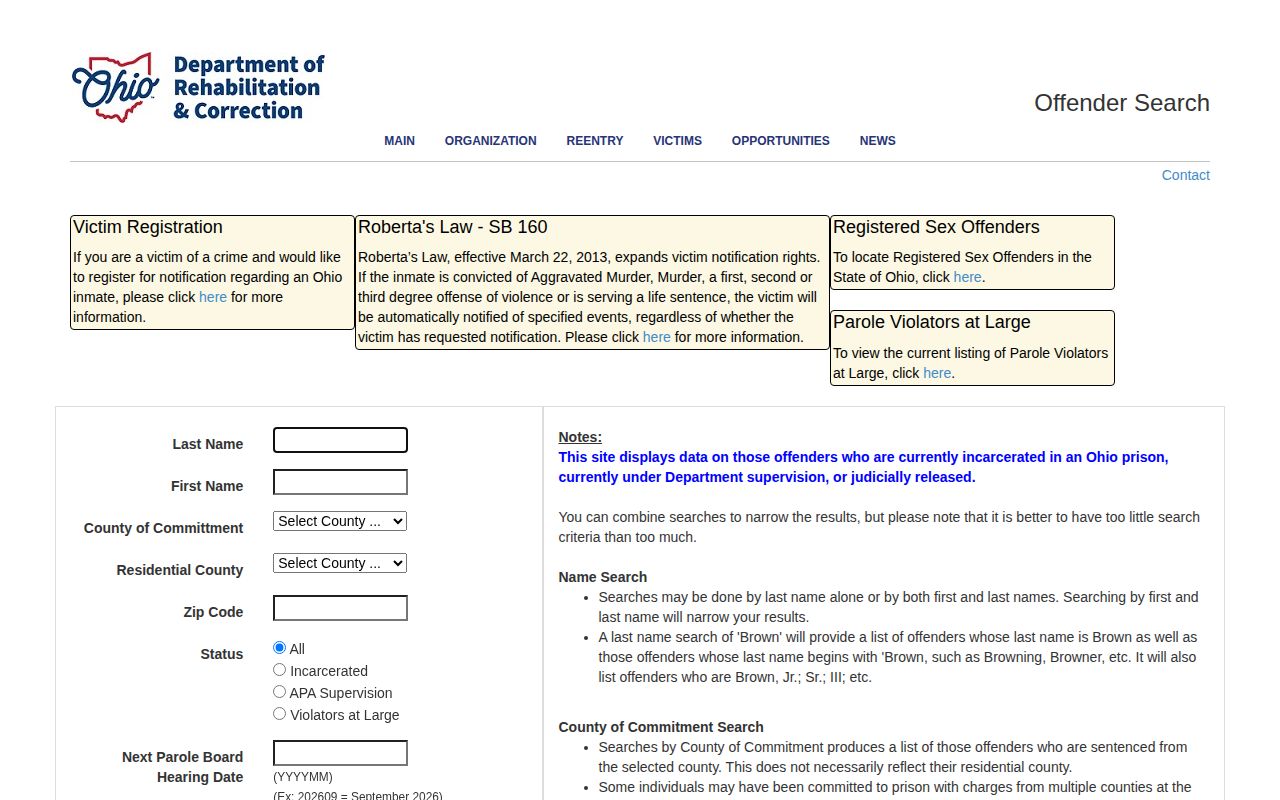
Match any ODRC result by identifiers and status. Then set it apart from the county arrest and court records that came first.
Request a Clermont County Arrest Record
The Sheriff Public Records Request page offers several ways in. NextRequest, email, phone, mail, and in-person visits all work. The NextRequest portal went live June 23, 2025. It adds request tracking plus an optional public archive. Prefer the phone or the counter? Call 513-732-7555, email sheriffpublicrecords@clermontcountyohio.gov, or stop by 4470 State Route 222, Batavia, Ohio 45103. Hours run 8:00 a.m. to 4:00 p.m., Monday through Friday, excluding holidays. The office commits to a reasonable time frame rather than a fixed deadline.
Keep each request narrow so it routes correctly:
- Identify the person with full name and DOB, when known.
- Add the arrest date, booking date, booking number, agency, and case number.
- Name each desired item, such as arrest papers, arrest jacket, jail-register entry, release sheet, or booking photograph.
- Ask for electronic delivery, releasability, redactions, and a cost estimate before charges are incurred.
- Request the legal basis for any withheld portion and follow the case through the proper clerk.
The Sheriff's public records request page lists the portal and every direct-contact option. It is the right fallback once a released person's booking no longer appears on the live roster.
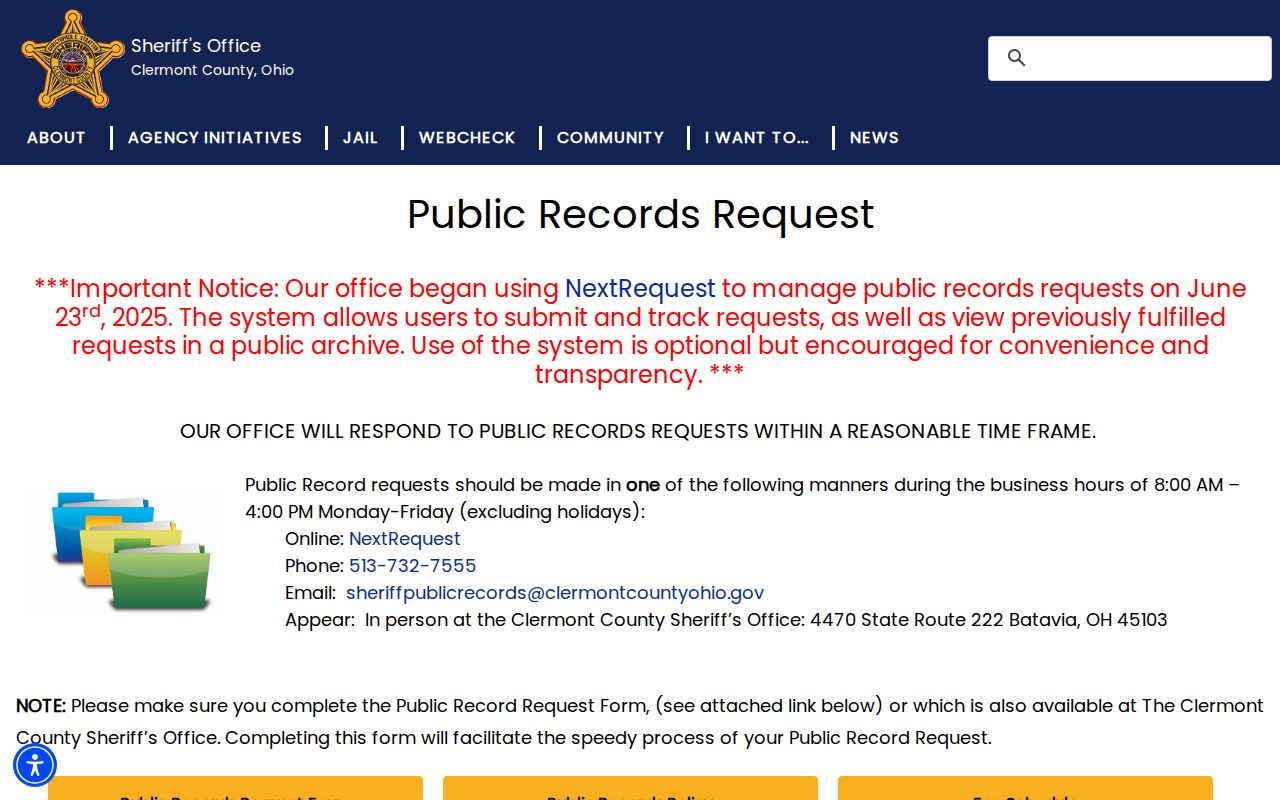
A tracked request preserves the exact scope, response, fee estimate, and any redaction explanation.
Note: Request the arrest report from the arresting agency; the Sheriff's office decides access only for records it holds.
Ohio Arrest Records and Removal Law
Ohio's Public Records Act, above all ORC §149.43, governs what public offices must release, exemptions and redactions aside. The Ohio Attorney General's Public Records Act guide walks through the whole framework. Several categories stay limited. Juvenile facts, protected victim details, confidential medical material, sealed cases, security-sensitive jail data, and some investigatory records can all be withheld. Never reconstruct an identity an official source chose to leave out.
Official relief and private-site correction are two different tracks. Clermont Municipal Court publishes its own sealing and expungement forms. Felony relief must go through the court that handled the case under Ohio Chapter 2953. Carry any signed order to the agency and the publisher involved. Busted Newspaper, RecentlyBooked, and Mugshots.com each offer a free operator process for certain sealed, dismissed, mistaken, juvenile, or otherwise qualifying records. Those policies bind no Sheriff and no court. Skip any service promising secret access or guaranteed deletion. And hold back identity documents until you know the recipient and its policy.
Search engines have their own outdated-content process once a source page changes. That fixes the search result, not the government record. The strongest evidence stays the court order, the custodian's response, and a saved copy of the exact URL needing correction.
Clermont County Warrants and Most Wanted
Clermont County has no single public database of active warrants. Misdemeanors and preliminary felony matters start with Municipal Case Access. Indicted felonies land in Common Pleas. Court records can lag. The Common Pleas grand jury posts new reports on Tuesdays and Thursdays, skipping legal holidays. A sealed indictment can hide the file even longer. A Clermont County arrest can show in the jail roster. The court page may still catch up, and neither record is wrong.
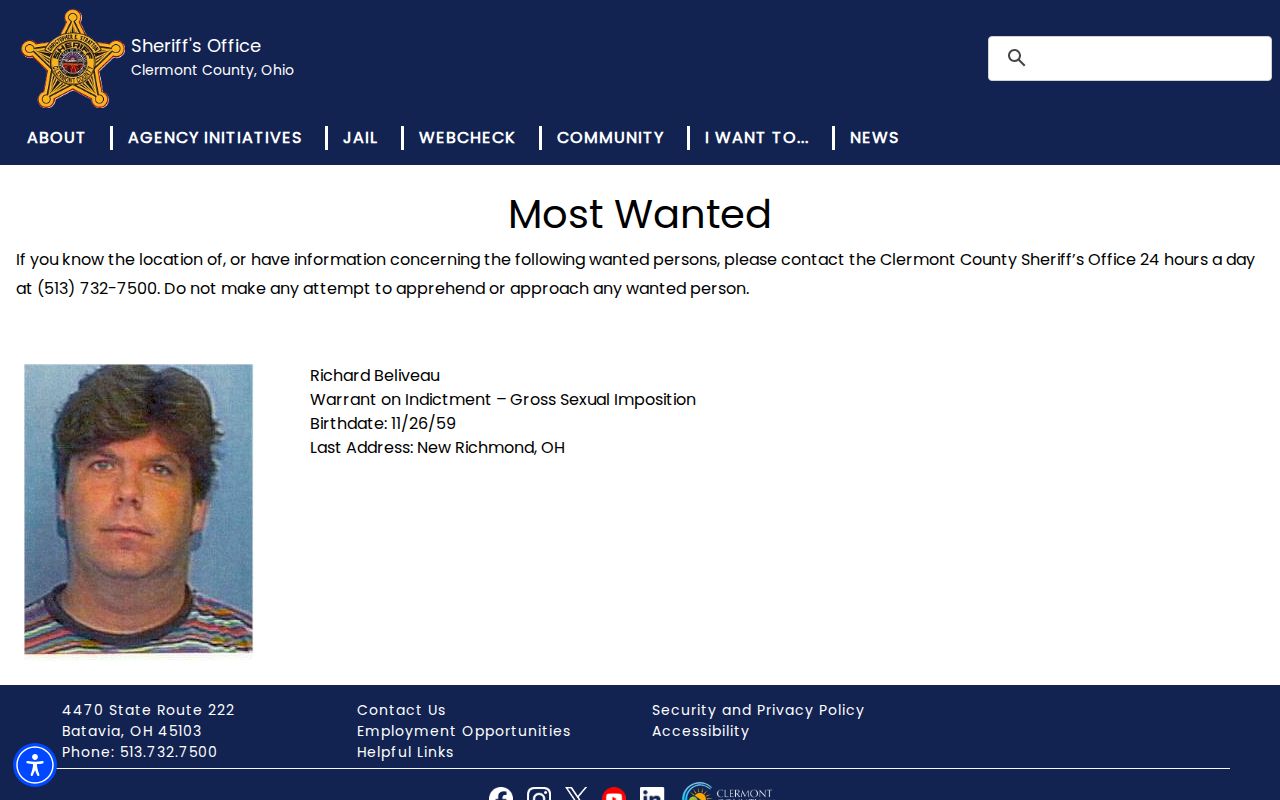
The Most Wanted page from the Sheriff is a hand-picked shortlist. It is not the county's complete warrant file. Each listing shows a photo, identity details, the warrant or indictment, a birthdate, and a last address. The office posts no update schedule. For most-wanted tips or warrant questions, call 513-732-7500. Anyone worried about a personal warrant should contact the court or a lawyer. That conversation covers surrender, bond, and the hearing process.
The wanted list reads as an agency notice with its own safety warnings. Treat it as a notice, not a gallery.
Never approach or try to detain a wanted person. Call 911 in an emergency. Non-emergency tips can go through the Sheriff or the linked Crime Stoppers route.
Operation CLEAN SWEEP shows why an operation report is not a live warrant database. On September 10, 2025, agencies attempted 55 warrants. They brought 27 people to the Clermont County Jail. Those one-day figures cannot confirm whether a warrant remains active today.
After a Clermont County Arrest
A booked charge is never the whole case. Follow the court named in the roster entry. Clermont County Municipal Court handles misdemeanors, traffic matters, and preliminary felony proceedings, while Common Pleas takes indicted felonies and their later stages. Search by name or case number. Then read the docket, the judgment, and any later sealing order. Bond can change. A charge may be amended, reduced, dismissed, or fully resolved after the roster entry was first created.
| Stage | Best record | Meaning |
|---|---|---|
| Arrest | Police or deputy report | Agency account of the event and alleged basis |
| Booking | Jail roster/intake file | Identity, custody, charges, bond, and court routing |
| Arraignment | Court docket | Early hearing and current case status |
| Disposition | Judgment/order | Final recorded result, including dismissal or conviction |
Why can the roster and court disagree? They sit in different systems on different clocks. Use the roster for present custody, and the signed court entry for the legal outcome.
Custody Beyond Clermont County
A name can drop off the roster after a release, a transfer, or a move into another system. That alone does not end the case. Ohio VINE tracks county-jail, ODRC, and DYS events, including release, transfer, escape, and death notifications. ODRC holds sentenced state prisoners and some supervision cases. The federal BOP Inmate Locator covers federal custody but posts no public inmate photos. ICE keeps its own locator. These systems do not swap data freely. Clermont's Sheriff documents 287(g) activity, ICE detainers, and transfers from the county jail to ICE. After a supported transfer, try the ICE Online Detainee Locator. Photo questions belong in the Clermont County booking-photo section.
When Clermont Arrest Entries Update
The hourly roster update is a publishing rhythm, not a guarantee. Every arrest begins with an agency event. Transport, medical clearance, identification, property intake, fingerprints, charging paperwork, and jail acceptance can all come before a public entry is ready. Some people are cited or released without ever becoming current inmates, and the Sheriff states no fixed booking-to-publication lag. So note the time you checked. Wait one hourly cycle and search again.
Release flips the problem. A person can appear briefly, leave county custody, and vanish before your next search. The records unit can search deeper. Give them a name and a date, and they can check the arrest jacket, the release sheet, or the permanent jail register. VINE adds a signal for a known person, though its feed runs on its own schedule. Don't force one timestamp onto these systems. A court case may still be invisible. A secret indictment stays sealed until the legal basis for secrecy ends.
Does no result mean no arrest? No; it means the source had no matching public entry at that moment. Check spelling and identity. Then account for the custody scope, and use the arresting agency or records unit when a specific event is known.
Note: Save the access date and source name whenever timing matters; a live roster can change at the next update.
Reading Clermont Jail Numbers Carefully
The Clermont County jail's yearly reports describe a workload, not a live arrest feed. That gap trips people up. The 2024 report shows 4,605 bookings and 4,674 releases for the year. Average daily population sat at 310, while average monthly population was 384. Each number measures something different. You cannot pool them into one group of unique people. And a release count topping the booking count is not an error. Inmates present on day one push the totals around. So do transfers, repeat bookings, and the report's own counting rules. Warrant figures deserve the same patience. The 2025 Sheriff report shows 3,042 warrants served and 1,018 recited. It lists 3,319 attempted and 175 out-of-county warrants. Those categories do not stack neatly. One person can appear in more than one line. Treat them as a map of the warrant workload rather than a head count. For any single current case, the live court and agency route is the way to check.
Yearly numbers also cannot prove crime is rising or falling. That claim needs a comparable series, stable definitions, and population context. A single report supplies none of those. The public roster is a custody list that changes daily, not a statistics dashboard. A daily head count is not annual admissions either. Keep Clermont County arrest data tied to what each official publication actually measures. Then the numbers stop misleading you.
Protected Clermont Arrest Information
Public access to Clermont County arrest records is broad. It still stops at real boundaries. An agency can redact social security numbers and protected addresses. It can also pull medical details, security-sensitive jail information, and facts shielded by another law. Juvenile material plays by different rules altogether. A sheriff's release may carry a Juvenile Court label. Or it may drop a name when a victim's age or some other protected fact requires it. Respect that gap. Stitching commercial copies together to rebuild a protected identity defeats the whole point of the official limit. It can also spread bad data.
Sealing and expungement shift things further. Sealing generally pulls a record out of ordinary public view. Expungement can mean destruction or deletion when Ohio law allows it. Eligibility turns on the case and the governing statute. Use the proper form and the court that handled the matter. Get a signed order. Then ask each record holder to apply it. A private archive may still need its own free correction process after the official case changes.
Retention is not release, either. A jail register can be permanent while certain fields stay protected. An arrest jacket may sit on a six-year schedule while an exception covers one page. The absence of a photo line in the schedule proves nothing about whether a booking photo survived. The custodian has to say what is held and which series governs it. That same office says what part can be produced.
This is why the source hierarchy matters. Start with the Sheriff or the arresting department. Then move to the court for the outcome and treat copied databases as leads only. A commercial page can outlive the official roster. Age alone does not make its charge text complete or current.
Older Clermont County Arrest Records
The Sheriff's retention schedule gives Clermont County researchers a concrete archive path. Jail arraignment sheets and release sheets carry 24-month retention periods. Arrest jackets hold copies of arrest papers and releases for prisoners. They carry 72 months. The jail register is permanent. Booking photographs get no separate line in the schedule. So ask whether the image belongs to an arrest jacket or another jail-management record. Do not claim a fixed photo-retention period.
Online court history has local cutoffs. Municipal materials reach back to May 1, 1996. Common Pleas materials reach January 1, 1988, and anything earlier calls for a manual clerk search. Start with the Sheriff for recent jail material and use the right clerk for the outcome. Contact the Clermont County Records Center only after you have the agency, date range, case or booking number, and record series in hand. Ohio History Connection handles historical state archival collections. It does not handle modern county booking feeds. Old Clermont Sun and Clermont Courier issues can add news context through the library newspaper archive. They may omit dispositions, and they may use outdated terms. They never replace the custodian's record or a court order.
A sharp archive request names the exact series. Ask broadly for everything and you will wait. For a booking that has left the roster, request the arrest jacket and the jail-register entry. Ask also for the arraignment sheet and the release sheet. Request any releasable identification photograph too. Give a tight date range. Add the booking or case number. If the office reports no record found, ask which retention category and custodian would apply. That answer separates a destroyed record, a transferred record, and a request sent to the wrong office.
The Records Center is a lead, not the automatic holder of every jail item. Its directory telephone is 513-735-8660. The Common Pleas Clerk handles older felony-case research and manual searches beyond the online range. That office sits at 270 East Main Street in Batavia. Modern state-prison history begins with ODRC. Historical admission registers and older prison collections live with Ohio History Connection. Each stop covers a different custody period. So follow the person's documented path instead of treating one database as a lifetime arrest record.
Clermont County Sheriff’s Office Location and Directions
Public Record Search
Sponsored Results