
Clermont County Arrest Log Sources
The Sheriff's office keeps no full arrest log. No page there works as a daily, weekly, or rolling record of bookings. What it does publish is the Sheriff Press Releases page. It posts dated accounts of selected investigations and public events. A release can name the agency and describe the conduct reported. It skips most citations and misdemeanors. It also skips routine bookings and releases.
Structured weekly reporting has existed here. A weekly offense-and-arrest report dated July 1, 2024 proves it. That document ran 91 pages of incidents and arrest rows. The site does not present it now as an active weekly archive. It stands as history rather than a publishing promise.
That distinction shapes how a multi-day search works. Move backward through dated announcements for events that earned a release. For ordinary bookings, lean on the live jail roster and the records unit. Then turn to the court clerk once proceedings begin. No single source carries a case from offense to arrest, jail intake, release, and outcome. The official release stream runs on the Sheriff's site in reverse-date order.
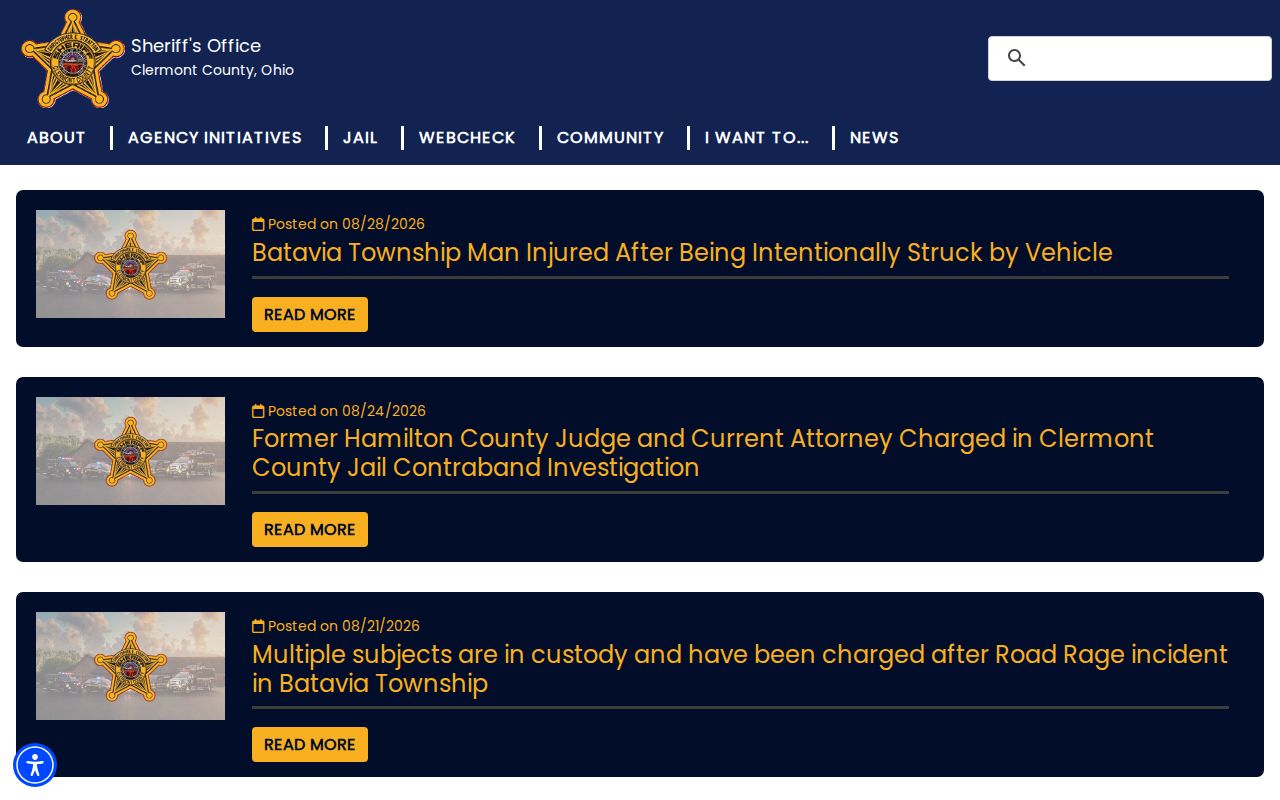
Its stories provide agency context, yet they are not a complete booking list.
Read Clermont Arrest Dates Correctly
Dates inside one Clermont report do different jobs, so keep them apart. The offense can happen long before the arrest. The arrest can precede jail intake. A press release may land days after both. Timing depends on the investigation or a media decision. The historic weekly report mixed older offense dates with later arrest dates. Those gaps sat in the same rows.
| Date or source | What it establishes | What it does not establish |
|---|---|---|
| Offense date | When the event was recorded | Arrest or conviction date |
| Arrest date | When arrest was recorded | Length of custody |
| Booking date | County jail intake | Final outcome |
| Release date | When a selected story posted | A full daily list |
| Court docket | Later case events | Real-time custody |
Need the freshest names? Use Clermont County 24 Hour Arrests for an immediate check. This arrest log handles the wider date-range and context work.
Historical Clermont Blotter Fields
The old weekly Clermont County blotter packed each row with detail. Offense date and time came first. Then came offense number, location, and code. Every arrest line listed the arrestee's name, age, and gender, plus the arrest date and where the booking happened. Charges could repeat across rows, and one person might appear more than once in the same Clermont County arrest report. To trace any case further, use a case number and go to the right court: Municipal Court for misdemeanors and preliminary felony matters, Common Pleas for felony indictments and bindovers.
- Blotter
- A chronological agency record, not necessarily a complete jail roster.
- Booking
- The intake process that creates a jail record.
- Disposition
- The court-recorded outcome of a case.
- Archive
- Retained material that may require a records request.
Clermont Weekend Arrest Log Timing
No dependable weekend, Monday catch-up, or holiday posting schedule exists for a multi-day Clermont log. Promising a weekend surge or a fixed release time would mislead readers. Press releases run on events, not a clock. Their dates reflect publication more often than booking. The hourly roster cadence never transfers to the release archive.
So use a sequence instead. Check the roster first for anyone in county custody. Review official releases for context on bigger events. Search the right court once a case number is known. When an entry vanishes from view, request the Sheriff record with the person's details and a tight date range.
Clermont Sun Is Not a Blotter
Once official sources run dry, the Clermont Sun news section adds local reporting on arrests, indictments, and major investigations. Its weekly rhythm differs from a jail feed. Stories sometimes carry agency-supplied images. The paper publishes no complete daily booking list, though.
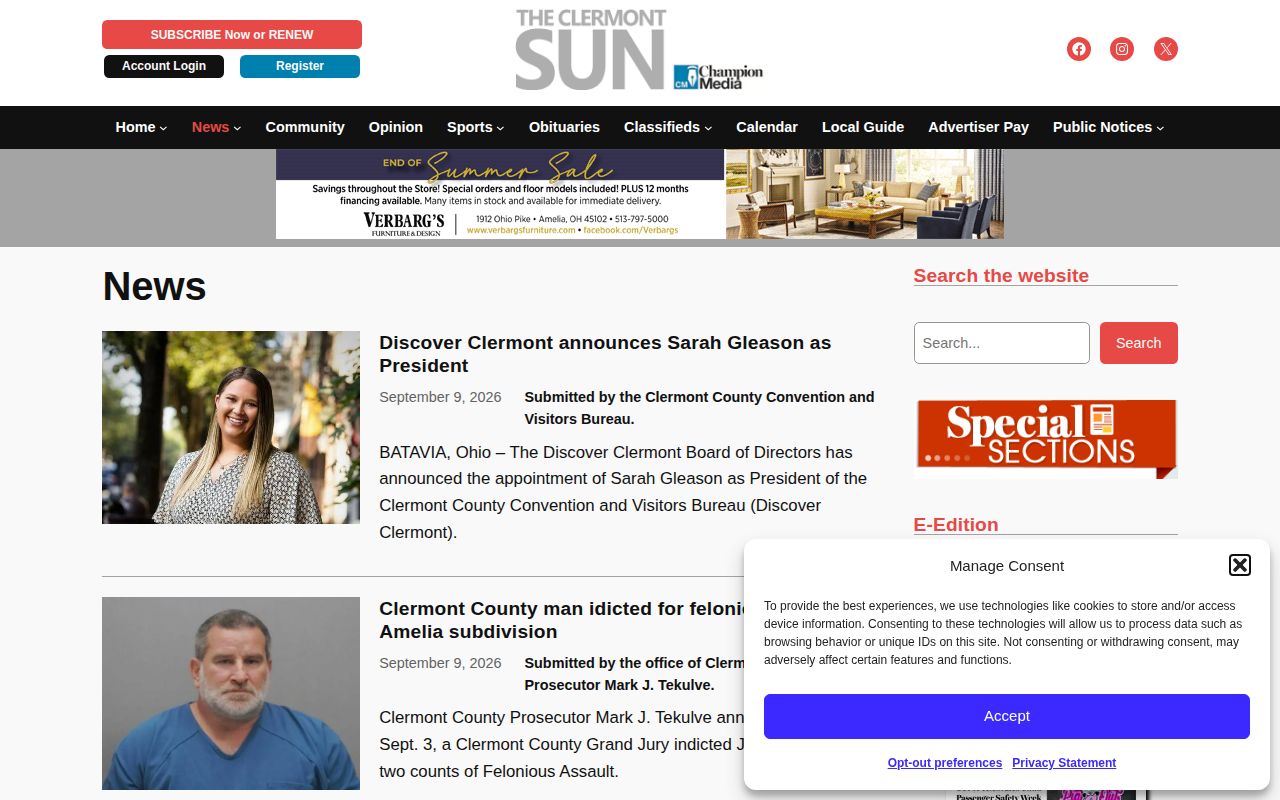
News coverage here is event-based. Check every story against the Sheriff and the court clerk. The Clermont Sun picks what it covers. Other outlets pick differently. Clermont Guardian and regional broadcasters also follow selected events. They are leads rather than custody records.
A city named in a story may be the event location. It could also mark a residence or an agency's jurisdiction. It does not prove where the booking happened. Agency attribution matters just as much. A Sheriff release covers the Sheriff's chosen event. A village police report stays with the village that wrote it. Ohio State Highway Patrol, a neighboring county, or a federal agency may hold another piece. When a story names several agencies, request the narrative from the one that created it. Ask the Sheriff for the jail intake material.
Find Older Clermont Arrest Records
When an entry drops from view, the Sheriff's records channel comes first. The retention schedule lists arrest jackets for 72 months. Arraignment and release sheets stay for 24 months. The jail register is permanent. Booking photos get no separate line. Ask which retained record might hold a releasable image.
- Give the full name, birth date, booking date, and booking number if known.
- Ask for the arrest jacket, jail-register entry, release sheet, or another exact record.
- Use Municipal Case Access for records from May 1, 1996 forward and request manual research for older matters.
- Use Common Pleas Case Access for records from January 1, 1988 forward and ask for older files manually.
- Confirm the final result through the clerk, not a copied arrest entry.
The Sheriff Public Records Request is the official route for older material. The Clermont County arrest records overview maps the other custody and court systems.
Local court access has two cutoffs online. Municipal material reaches back to May 1, 1996. Common Pleas material reaches January 1, 1988. Anything earlier calls for manual clerk research. Those limits apply to web access only, not to whether an older record exists. Give the clerk a close date range, the name, and any known case number to cut down mistaken matches.
Unofficial Clermont Multi-Day Indexes
Clermont County's unofficial arrest indexes round out the list, and each one behaves differently. RecentlyBooked shows a rolling 30-day window of bookings that refreshes several times a day. Busted Newspaper splits its Clermont arrest content across paginated pages. Mugshots.com keeps older entries on hand. The RecentlyBooked Clermont page is a fair sample of this secondary landscape. Each operator decides its own update pace and how long an arrest entry stays up.
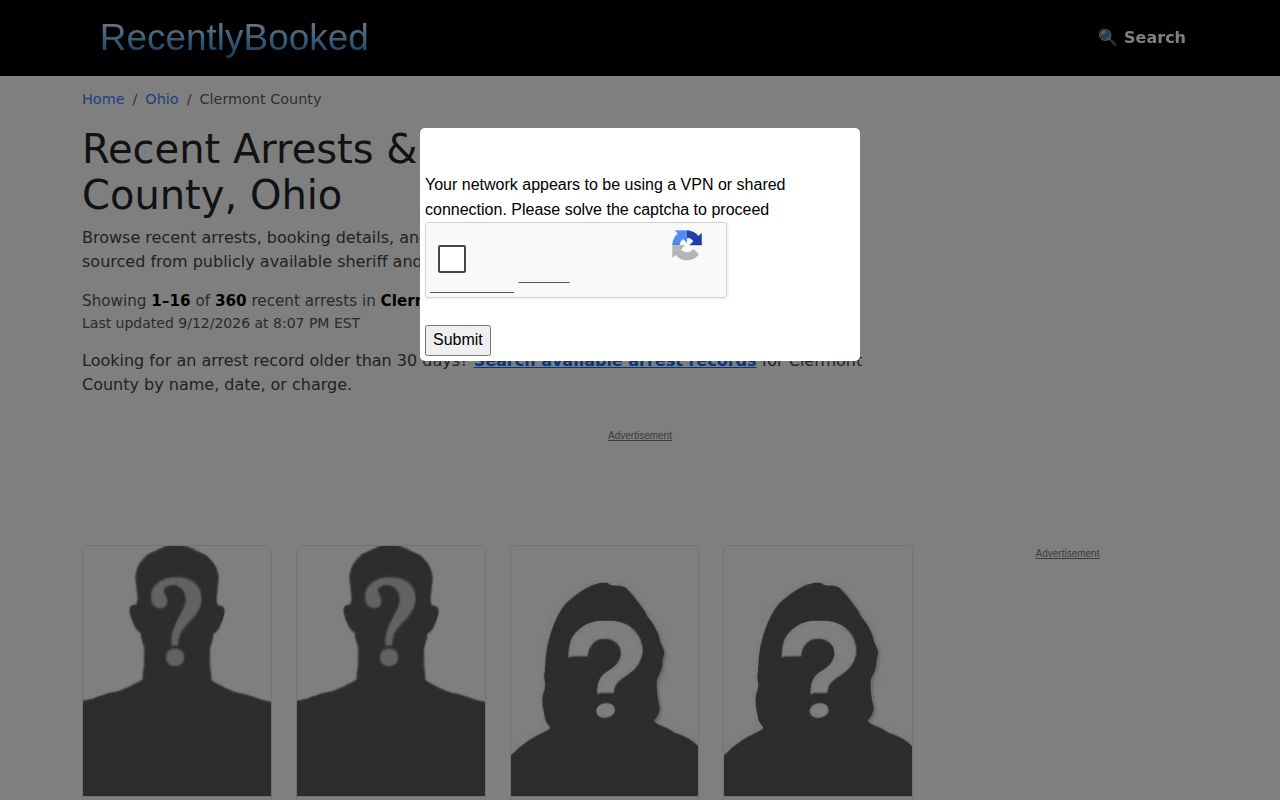
Treat these sites as leads. RecentlyBooked, for example, is not a Sheriff record. It says outright that the county does not supply booking photos. That honesty is rare and worth noting. Any item pulled from a third-party page can be stale, duplicated, or incomplete, so confirm it with an official custodian before relying on it.
Annual Sheriff statistics deserve the same restraint. Year-labeled totals for bookings, releases, jail population, investigations, and warrant categories do not form a daily series. They count events, not unique people. A rise or drop in the yearly figure proves nothing about crime trends on its own.
Photos need equal care. A press release may include a supplied image tied to one chosen investigation. The public jail roster, by contrast, lists no booking-photo field in its entries. A news photo does not mean a standard mugshot exists for every Clermont County arrest. When you truly need an official image, identify the booking first, then ask the Sheriff's records unit whether a releasable photo exists. Skip unlabeled copies with no confirmed source or date.
Third-party pages also linger after the official roster changes. Long visibility is not accuracy. Compare the booking date, agency, case number, and current court docket against the custodian's version. If the copied entry conflicts, trust the official record. Then ask the publisher to correct it through its own free process.
Public Record Search
Sponsored Results